
Can enhancing flexibility unlock future value?
Comment by Grant Tuff, on behalf of Energy Systems Nexus

At Energy Systems Nexus we worked with Energy Systems Catapult to understand the potential for new, enhanced forms of flexibility, what it might mean for Net Zero energy systems and what might need to be done to unlock its potential.
We found that rolling out enhanced consumer flexibility (balancing energy demand and supply whilst keeping within the physical constraints of the system) could save the UK £125bn between now and 2050.
How might enhanced flexibility influence what Net Zero energy systems look like?
Our modelling tells us that whilst renewable generation might make up around 55% of total generation in low-flexibility scenarios, high levels of flexibility could allow this to rise to 67% whilst keeping the whole system cost-effective. This has the additional benefit of reducing the need for natural gas with a corresponding increase in UK resilience to price shocks and dependencies on imported gas.
The scale and types of flexibility will influence the energy mix required for a cost-effective Net Zero transition. Consequently, considerations regarding flexibility should extend beyond electricity alone.
Whilst electricity will have an important role day-to-day there is a real challenge with ensuring resilience during periods of peak demand. These can heavily influence the types of storage that will be needed. Meeting peak demand during long periods with low renewable energy generation creates a need to be able to store energy for several days, or months and be able to deliver it over periods that could last a week or more. This means storing energy in other forms than electricity, including as heat and hydrogen.
Conversely, to achieve high levels of electrification, flexibility cannot be restricted to large assets connected to the transmission network but will need to reach into distribution networks and behind the meter to access flexibility in people’s homes and businesses.
What does it mean for domestic consumers?
Enabling high levels of participation in flexibility could influence the benefits that people see from switching to low-carbon technologies such as electric vehicles, heat pumps, solar and batteries.
If it is easy for consumers to register their devices and participate in flexibility markets then the rewards for doing so could significantly reduce their energy costs. This could lead to increased electrification of both heat and road transport, with annual electricity demand increasing by up to 35% by 2050. This would reduce overall system costs whilst helping to decarbonise both sectors.
For example, in our modelling, electric solutions provide 52% of total domestic and non-domestic heat demand in low flexibility energy systems compared to as much as 90% in highly flexible energy systems (see Figure 1). Similarly, there is lower potential for hydrogen in road transport with electric solutions preferred in systems with higher levels of flexibility.
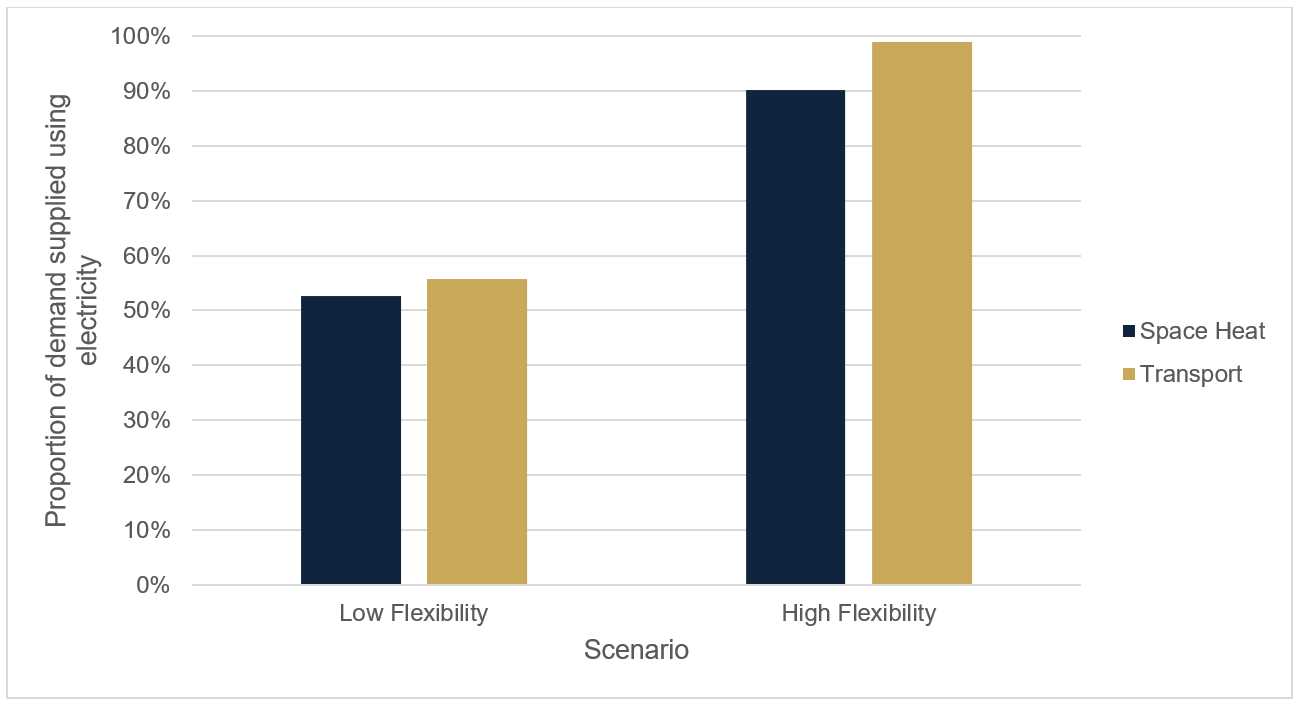
Figure 1: Comparison of the level of electrification of heat and transport at different levels of flexibility in 2050
Aggregated together, electric vehicles should become one of the largest sources of flexibility in the future. System operation modelling shows that energy supply from vehicle to grid operation could be three to six times that from other forms of electricity storage (see Figure 2).
There is plenty to do to unlock this potential, from supporting uptake of suitable electric vehicles and chargers using appropriate interoperability standards, to developing compelling consumer propositions that meet genuine consumer needs. We’ll need high levels of registration of flexible assets as well as the systems to control them precisely and reliably.
We’ll also need appropriate signals through markets and otherwise to reliably deliver the response at the right place in the right time for years to come as part of a changing energy system. There are further challenges to get the system working like clockwork, but what is clear here is that the potential prize for both consumers and the system is huge.
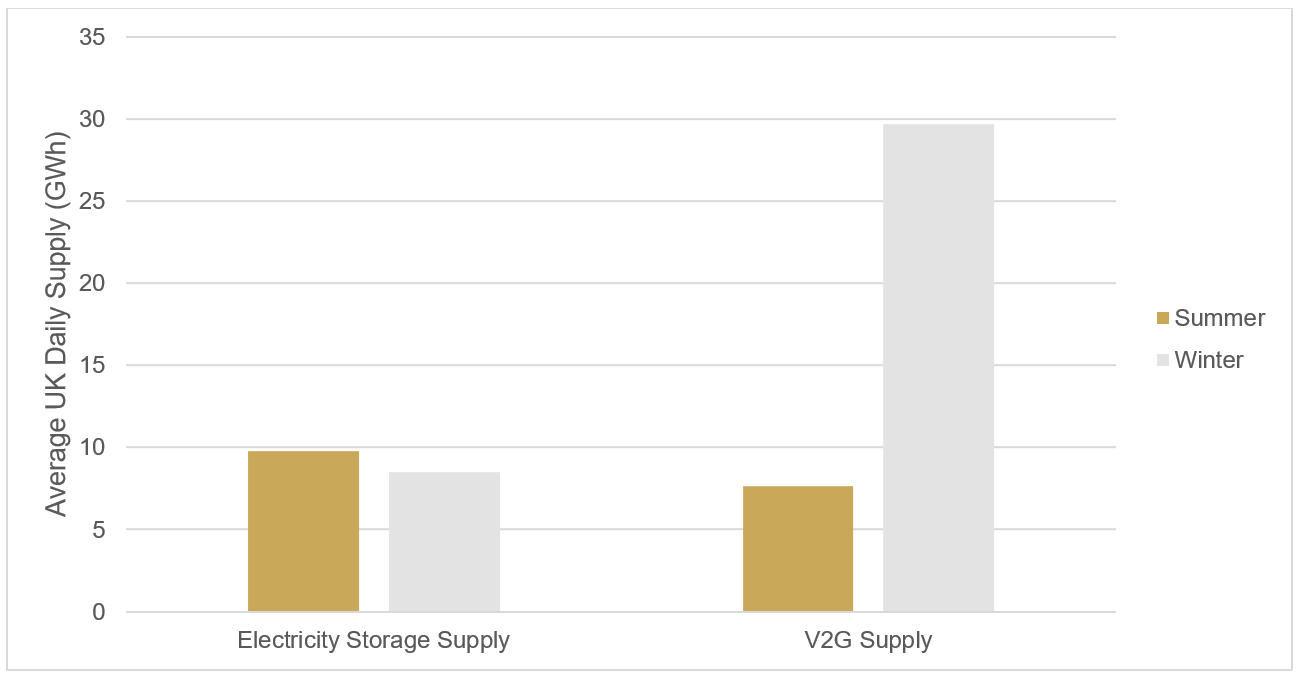
Figure 2: Comparison of average daily discharge of all electricity storage to that from vehicle to grid (V2G) for a highly flexible scenario in 2050
On a similar theme, having 30% of heat pump demand operated flexibly could reduce peak demand from heat pumps by as much as 20% without influencing comfort.
In short, highly flexible systems will feature widespread consumer-led flexibility using behind the meter assets such as batteries, heat pumps and electric vehicles.
Big uncertainties
This future is far from certain. There are a range of uncertainties associated with achieving enhanced flexibility and what it will mean for Net Zero energy systems. Providing a stable platform for investments in flexibility can help to unlock private funding for flexible assets and provide more certainty for other Net Zero investments.
We found that uncertainty associated with investments in flexibility can drive uncertainty in other parts of the energy system as each will influence what is required of the other. For example, significant battery storage capacity will be needed to support integration of large quantities of solar. Without it a cost-effective system could see a switch to hydrogen turbines or to nuclear generation to produce low-carbon electricity.
Similarly, how we heat our homes will be influenced by the amount of flexibility in the electricity system. Without distributed electricity flexibility, cost-effective energy systems are likely to depend more on heat networks for flexibility. These networks would use connected heat storage rather than controlling of individual electric heat solutions.
Whilst much is happening there is still significant uncertainty in how markets and regulation will develop to support growth in flexibility. These will need to encourage and enable easy ways for consumers to install and operate flexible devices as well as allow creation of compelling offerings that meet genuine consumer needs.
Key points
Our modelling and analysis show that to achieve high levels of electrification, flexibility will need to build upon that provided by large assets connected to the transmission network. Control and operation of flexible energy assets will need to reach into distribution networks and behind the meter to exploit and coordinate flexibility in individual homes and businesses.
This depends on manufacturers creating flexibility-enabled devices. These devices must be trusted and easy to operate, and customers must benefit from doing so. Market opportunities for equipment manufacturers, flexibility service providers and aggregators will only emerge if the environment is favourable and consumers are able and willing to provide flexibility services.
Final message
Our analysis has shown that unlocking flexibility could be worth £125bn to the UK between now and 2050 but action is needed to unlock theses savings:
Standards for flexible devices that make it easy for consumers to install and operate them behind the meter must be developed;
Market regulations that allow flexibility products and services that excite and reward consumers, encouraging their participation must be created;
The full potential of vehicle to grid flexibility must be enabled through appropriate regulations on charge point and vehicle interface standards.
Members of the Energy System Nexus are excited by the opportunity to work with others to make all this possible and unlock the full potential of flexibility.
If you want to find out more, please read our new report here.